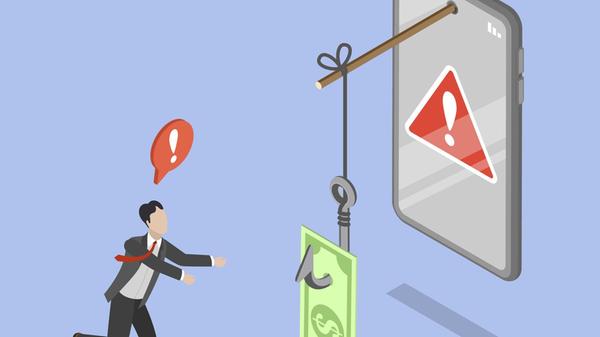
It is a deceitful scheme: people promise customers high returns online, for example through AI-optimized investment strategies or automated crypto trading. Large campaigns on social media and supposedly credible news sites claim that even politicians and celebrities use and recommend these previously “secret” financial products. But behind this lies not a profitable business, but a fraud operation.
According to a recent press release, after extensive investigations by the Central Cybercrime Unit Bavaria and the Würzburg Criminal Police Inspection, numerous premises were searched in Israel and Germany, and extensive evidence was secured in connection with organized gang fraud.
A total of 14 households, mostly private residences, were searched, the investigative team reports. The focus of the Europol-supported and accompanied operation was placed on the Israeli metropolis of Tel Aviv and Düsseldorf, the statement continues. Additionally, further premises in North Rhine-Westphalia, one location in Winnenden (Baden-Württemberg), and one in Berlin were searched.
The police investigation is being centrally conducted by the Würzburg Criminal Police, which established a dedicated investigative unit in July 2023.
And the scheme goes even further: after completing the registration, the investor gains access to an account on a supposedly reputable trading platform or downloads an alleged trading app. According to the police’s findings so far, after initial seemingly high returns in the early phase, the investor typically ends up losing their entire invested capital. Using these tactics, fraudsters alone rake in more than one billion euros annually in Germany.
From Franconia against online fraud: at least 120 victims in Germany
The focus of the recent "Action Days," according to police information, was the affiliate marketing industry, which closely collaborates with the actual fraud networks. According to current investigation findings, the individuals targeted by the measures on 25th of November are believed to have obtained the personal data of potential German investors in various roles - or knowingly passed this data on to fraudulent call centers - at least between 2019 and 2022.

The investigative measures in Düsseldorf and Winnenden targeted two so-called publishers. They are accused of deliberately managing misleading online advertising campaigns aimed at the German-speaking market. For example, these campaigns falsely claimed that the promoted investment strategies had been featured in public media and TV programs (such as the show "Höhle der Löwen", similar to Britains "Dragon‘s Den"). It was also frequently and fictitiously advertised that prominent figures from politics or the entertainment industry had made large sums of money with the respective investment products in a very short time. Images, logos, and photographs were unlawfully used to create an appearance of credibility, according to police sources.
The investigations in Israel focused on the operators of a so-called affiliate network. They are accused of obtaining customer data sets from numerous publishers linked to the network and knowingly passing them on to fraudulently operating call centers in exchange for payment. Based on the current findings, it is suspected that the affiliate network made customer data of 3,300 German victims available to fraudulent call centers. According to preliminary investigations, at least 120 German victims have since lost a total of more than 1.3 million euros.

However, the police indicate that there is likely a significant number of unreported cases. Numerous investors suffered losses in the five- to six-figure range. Initial findings from the operational measures suggest that the affiliate network was able to generate revenues in the high three-digit millions.
The focus of the Bavarian investigators is now on reviewing and analyzing the extensive electronic evidence. Given the complexity of the perpetrators’ structures, it is becoming clear that the investigation will take considerable time.