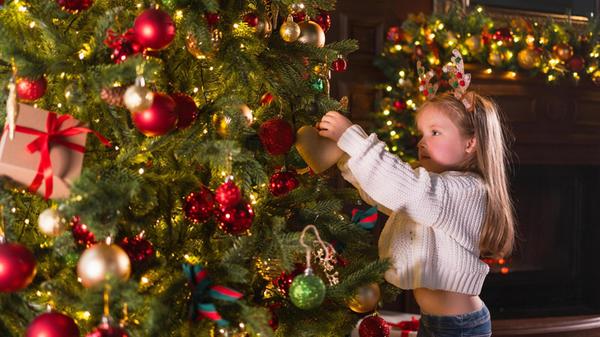
Christmas is just around the corner - and with it, the urgency to choose the right Christmas tree grows. As more people prioritize sustainability in their daily lives, this aspect is becoming increasingly important when selecting a Christmas tree. But what is actually the more sustainable choice - a real tree or one made of plastic?
In 2019, around 30 million Christmas trees were sold in Germany. These are millions of trees that first grow for years, then are cut down, stand in living rooms for a few days or maybe weeks, and are then disposed of, never to be seen again. The cultivation itself on plantations is not exactly environmentally friendly either, due to monocultures and the use of pesticides and fertilizers.
At first glance, this might argue in favor of an artificial Christmas tree. Surveys also show that around a quarter of respondents choose a plastic tree, such as the Amazon bestseller model. On the other hand, these artificial trees are often manufactured in East Asia, leading to significant emissions from long transportation routes. And, of course, plastic itself is not a renewable resource. Production and disposal are frequently far from environmentally friendly. So, is the artificial tree really the better choice after all?
The Federal Environment Agency states on its website: “From an environmental perspective, plastic Christmas trees are not categorically worse than natural ones.” The key factor is how long the artificial tree is used and how many real Christmas trees it “replaces” over its lifetime. As a rule, the longer the artificial tree lasts, the better its environmental footprint. However, there is no fixed number for when the plastic tree pays off. One Canadian study assumes 20 years, while other calculations suggest shorter timeframes.
Christmas trees and sustainability: what consumers should keep in mind
Michael Bilharz from the Federal Environment Agency told SPIEGEL that a fir tree from a plantation generates about three to seven kilograms of CO2 emissions. In comparison, plastic trees produce between 25 and 45 kilograms of CO2 during manufacturing and delivery. Ultimately, the environmental impact depends on the origin, material, lifespan, and disposal of the artificial trees. For example, a plastic tree produced in Europe is more sustainable than one from East Asia. When it has reached the end of its life, it must be disposed of as residual waste, the Federal Environment Agency emphasizes.
Another seemingly sustainable option is renting a Christmas tree in a large pot. In this model, the tree is used for several years, delivered by a provider before Christmas, and picked up again after the holidays. However, the Swiss environmental consultancy ESU-Services points out that this rental system only makes sense if the provider does not have to cover long distances. Additionally, the temperature changes between a warm living room and cold outdoor air cause significant stress to the plant, which it does not always survive.
The Umweltbundesamt recommends looking for organic certification or similar labels when purchasing a tree. This ensures that no harmful pesticides are brought into the living room along with the tree. The closer the tree is grown to its natural environment, the better its overall ecological footprint. The Bund Naturschutz offers a list of sellers of ecologically grown Christmas trees in Bavaria. Moreover, the Umweltbundesamt advises buying a tree from a local source, ideally from a dealer around the corner. The shorter the transport routes, the lower the CO2 emissions generated.