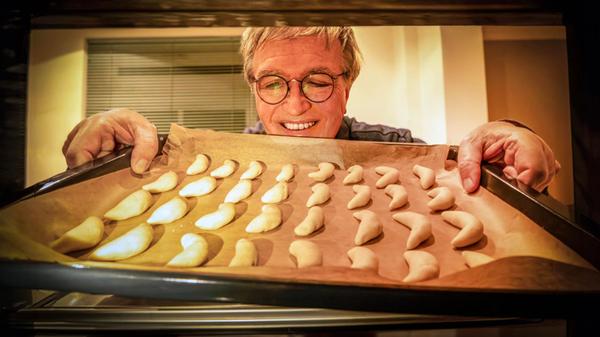
Cookies are as much a part of Christmas as the Christkindlesmarkt and Nordmann firs. In the lead-up to the holidays, both children and adults alike enjoy bringing recipes to life and baking their favorite cookies themselves.
Anyone who has ever baked something has likely tasted the dough at some point during the process. Yet, despite the fact that supermarkets now even sell ready-made cookie dough for snacking, it’s best to resist these tempting treats. The "Verbraucherzentrale Bayern" strongly advises its Instagram followers against eating raw dough in a recent post. This warning primarily concerns two ingredients.
The first problematic component in cookie dough is raw eggs. "Even with good hygiene, raw eggs can be contaminated with bacterial pathogens like Salmonella and Campylobacter," the post explains. Dough containing eggs should never be eaten raw. Instead, hygiene must be the top priority: all utensils that come into contact with raw eggs during baking should be thoroughly cleaned. This applies not only to kitchen tools but also to surfaces and one’s hands.
Flour can also have unpleasant consequences
Eggs are not the only risk factor when it comes to raw dough; raw vegan varieties should also be avoided. According to consumer protection agencies, certain bacteria are repeatedly found in raw flour. STEC bacteria can also cause diarrheal illnesses, but they pose a risk only in raw dough. This applies equally to baking mixes and ready-made doughs. As a result, pre-made "cookie dough" from the supermarket also comes with a consumption warning.
STEC bacteria are more widespread than many realize; the Federal Office of Consumer Protection and Food Safety detected STEC in about one in ten sample tests. Of course, raw dough is not automatically contaminated with bacteria or Salmonella, but certain groups should be especially cautious. Bacterial diarrheal pathogens can be particularly dangerous for children, the elderly, and people with weakened immune systems.