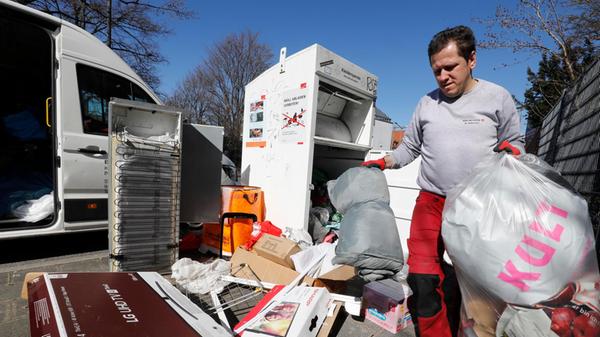
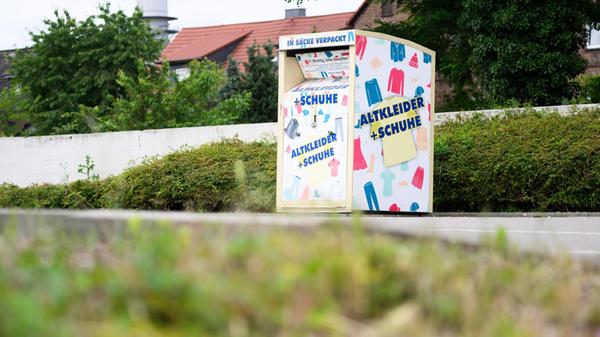
It seems like a great idea: If you have clothes at home that you no longer wear but are still in good condition, you can easily take them to one of the many clothing donation containers. This clears out your wardrobe and supports people in need. However, the „Bayerische Rote Kreuz“ (BRK), which operates these donation stations with containers in Nuremberg, now plans to remove many of them.
In a press release, the city of Nuremberg states: "The market situation for used textiles and clothing is becoming increasingly tense. The demand for second-hand clothing, both nationally and internationally, is plummeting, resulting in a significant drop in prices and sales difficulties."
So far, most of the textiles had found their way to Eastern Europe, the Middle East, and Africa. „These markets are now severely restricted due to the Russian war aggression against Ukraine, numerous other conflicts and crises as well as the “fast fashion trend“, which offers cheap new goods below the price of second-hand textiles,“ the city said in its statement. This trend will continue in 2025.
Additionally, it seems more and more people view the containers as a way to quickly and conveniently dispose of clothing: "As a result, the quality of the collected textiles has significantly decreased, with increasingly larger portions having to be discarded as waste." These clothes must then be sorted out and destroyed in a waste incineration plant.
Focus on the Southern Part of Nuremberg
For these reasons, 20 percent of the 540 container sites are set to be dissolved, more than 100 in total. The focus is mainly on the southern and southwestern parts of the city. "The affected containers will be marked with stickers in advance, and residents will be informed about alternative disposal options." Hermann Guth, Chairman of the Board of the Nuremberg BRK, says that they are hoping for the public’s understanding.
As a replacement, the city plans to implement a so-called "counter model" at all six recycling centers in Nuremberg. There, residents will be able to sort their used clothing, explains environmental officer Britta Walthelm.
The BRK is also planning a project with mobile collection points in the Southers- and Eastern areas of the City. "At specific times, citizens could hand over their used clothing directly to BRK staff," a speaker of the city explains. The announcement of the locations and times will be made after the planning is finalized through the social media channels and the website of the BRK as well as the city of Nurembergs website.